Why a Lower EMI Does Not Always Mean a Cheaper Loan
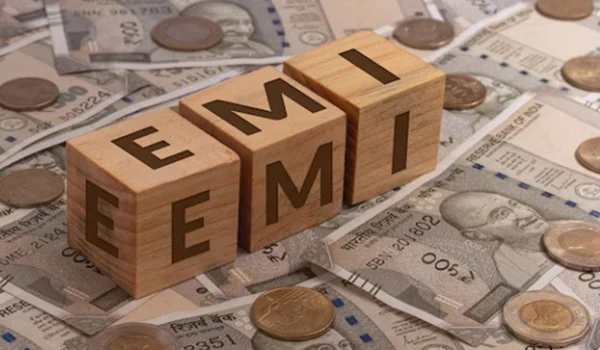
When people compare loans, one of the first numbers they look at is the Equated Monthly Instalment (EMI).
A lower EMI can certainly make a loan easier to manage each month. However, it does not necessarily mean the loan is cheaper overall.
A loan with a lower EMI may simply have a longer repayment period. Because interest continues to accumulate while the loan remains outstanding, the borrower may end up paying substantially more over the full tenure.
This is why borrowers should look beyond the monthly payment and examine the total cost of borrowing.
What Is EMI?
EMI is the scheduled amount a borrower pays toward a loan at regular intervals, usually every month.
An EMI generally contains two components:
- Principal – repayment of the amount borrowed
- Interest – the cost charged for borrowing the money
The proportion allocated to principal and interest can change over the course of the loan, depending on the repayment structure.
Why a Longer Tenure Can Lower EMI
Suppose someone borrows ₹10 lakh.
If the loan must be repaid over 3 years, the borrower has a relatively short period to repay the principal.
The EMI will therefore be higher.
If the same ₹10 lakh is spread over 7 years, the borrower has many more months to repay it.
The EMI can become considerably lower.
But the loan remains outstanding for longer, meaning interest can accumulate over a longer period.
A Simple Example
Consider a hypothetical reducing-balance loan of ₹10 lakh at 10% annual interest.
3-Year Tenure
- Approximate EMI: ₹32,267
- Approximate total repayment: ₹11.62 lakh
- Approximate total interest: ₹1.62 lakh
7-Year Tenure
- Approximate EMI: ₹16,601
- Approximate total repayment: ₹13.94 lakh
- Approximate total interest: ₹3.94 lakh
The 7-year loan has an EMI that is almost half of the 3-year loan.
But the borrower pays approximately ₹2.32 lakh more in interest over the full tenure.
These figures are illustrative and exclude processing fees, taxes, insurance and other applicable charges.
Lower EMI vs Lower Total Cost
This creates an important distinction:
Lower EMI = Lower monthly financial commitment
Lower total cost = Less money paid over the entire loan
These are not necessarily the same thing.
A borrower might prefer a lower EMI because it fits comfortably within the monthly budget, even if the total interest is higher.
Why Interest Keeps Adding Up
With a reducing-balance loan, interest is generally calculated on the outstanding principal.
At the beginning of the loan, the outstanding amount is relatively high.
As the borrower repays the principal, the balance decreases.
However, with a longer tenure, the borrower takes more time to eliminate that balance.
As a result, interest continues to be charged for a longer period.
The EMI Can Hide the Total Cost
Imagine two lenders offer you the following options:
| Loan | EMI | Tenure |
| Loan A | ₹25,000 | 4 years |
| Loan B | ₹18,000 | 7 years |
Loan B looks cheaper because the monthly payment is ₹7,000 lower.
But this comparison is incomplete.
You need to know:
- Loan amount
- Interest rate
- Total number of payments
- Total interest
- Processing fees
- Other charges
- Repayment method
Only then can you determine which loan actually costs less.
Interest Rate Also Matters
Tenure is not the only factor.
Suppose:
Loan A: Lower EMI but higher interest rate
Loan B: Higher EMI but lower interest rate
Loan A may appear more affordable every month, but the overall borrowing cost could be higher.
Therefore, comparing EMIs without comparing interest rates can be misleading.
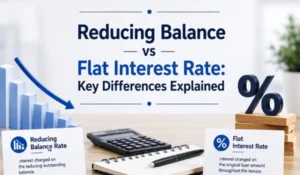
Flat Rate vs Reducing Balance
The method used to calculate interest also matters.
A loan using a flat interest rate may calculate interest based on the original principal for the stated period.
A reducing-balance loan generally calculates interest on the outstanding principal.
Therefore, two loans with similar-looking interest rates and EMIs can still have different total costs.
Borrowers should always find out how the interest is calculated.
Longer Tenure Can Be Useful
A longer tenure is not automatically a bad choice.
A lower EMI can provide important benefits when the borrower has limited monthly cash flow.
For example, a person may choose a longer tenure to:
- Keep the EMI manageable
- Maintain an emergency fund
- Handle other financial obligations
- Avoid excessive monthly financial pressure
- Maintain greater cash-flow flexibility
The trade-off is usually a higher total interest cost.
The Problem With Choosing an EMI That Is Too High
The opposite mistake is also possible.
A borrower may choose the shortest possible tenure simply to minimize interest.
But if the EMI consumes too much of their monthly income, it can create financial stress.
This could leave less money available for:
- Essential expenses
- Emergency savings
- Investments
- Other debt payments
Therefore, the objective should not simply be to find the lowest possible total interest.
The goal is to find a repayment structure that is both affordable and financially reasonable.
What Happens When Income Increases?
A borrower with a longer-tenure loan may later experience an increase in income.
They may then have the option, subject to loan terms, to:
- Increase the EMI
- Make partial prepayments
- Reduce the remaining tenure
This can help reduce future interest.
However, applicable prepayment conditions and charges should be checked before taking action.
Why Total Repayment Is More Important Than EMI Alone
Suppose a lender tells you:
“Your EMI will be only ₹15,000.”
That sounds attractive.
But the more important questions are:
For how many months?
What is the total repayment?
How much of that total is interest?
For example, ₹15,000 per month for 36 months is very different from ₹15,000 per month for 84 months.
The monthly payment is identical, but the total amount paid is completely different.
A Better Way to Compare Loans
Before selecting a loan, compare these numbers:
- Loan Amount
How much money are you actually borrowing?
- Interest Rate
What is the applicable annual interest rate?
- Interest Calculation Method
Is it flat-rate or reducing-balance?
- Tenure
How long will you be making repayments?
- EMI
What is the monthly repayment?
- Total Interest
How much interest will you pay over the full scheduled tenure?
- Total Repayment
How much will you pay to the lender in total?
- Additional Charges
Are there processing fees, penalties or other costs?
A Useful Rule of Thumb
When comparing two loans with similar principal amounts and interest structures:
Lower EMI + Longer tenure = Usually higher total interest
Higher EMI + Shorter tenure = Usually lower total interest
This is not an absolute rule for every possible loan structure, but it is a useful starting point for understanding the trade-off.
Lower EMI Can Improve Cash Flow
There is one important advantage to a lower EMI: monthly liquidity.
Suppose your income is ₹80,000 per month.
An EMI of ₹15,000 leaves more monthly cash available than an EMI of ₹30,000.
That additional cash could potentially be used for:
- Emergency savings
- Investments
- Household expenses
- Other financial commitments
Therefore, a borrower may rationally accept a higher total interest cost in exchange for better monthly cash flow.
The Cheapest Loan Is Not Always the Best Loan
Financial decisions are not based only on mathematical interest costs.
For example, a shorter-tenure loan may save ₹2 lakh in interest but require an EMI that leaves the borrower with very little monthly flexibility.
A slightly longer loan may cost more but provide a safer cash-flow position.
The better choice depends on the borrower’s financial circumstances.
Final Thoughts
A lower EMI can make a loan feel cheaper, but it does not necessarily make the loan cheaper.
The main reason is that a lower EMI often comes with a longer repayment tenure, allowing interest to accumulate for a greater period.
Before choosing a loan, don’t compare only the monthly payment. Look at the interest rate, tenure, interest calculation method, total interest, total repayment and additional charges.
The most important question is not:
“How low can my EMI be?”
It is:
“How much will this loan cost me from the first payment to the last?”
That number gives you a much clearer picture of the true cost of borrowing.