Token Unlocks: Why Large New Supply Can Affect Market Prices
A cryptocurrency can have a fixed maximum supply while still experiencing significant increases in the number of tokens available for trading.
One reason is token unlocking.
Many crypto projects initially lock certain tokens allocated to founders, employees, investors, advisors, communities or ecosystem programs. These tokens may become transferable according to a predetermined schedule.
When a large number of tokens become available at once, the market can face additional potential selling supply.
This does not automatically mean that the token price will fall, but it can change the balance between available supply and market demand.
What Is a Token Unlock?
A token unlock is the release of previously restricted tokens so that they can become transferable or otherwise available according to the project’s rules.
For example, a project may have:
- 1 billion maximum tokens
- 300 million currently circulating
- 700 million locked or otherwise not circulating
The locked tokens may gradually become available through a vesting or distribution schedule.
Once unlocked, they may increase the circulating supply.
Why Are Tokens Locked in the First Place?
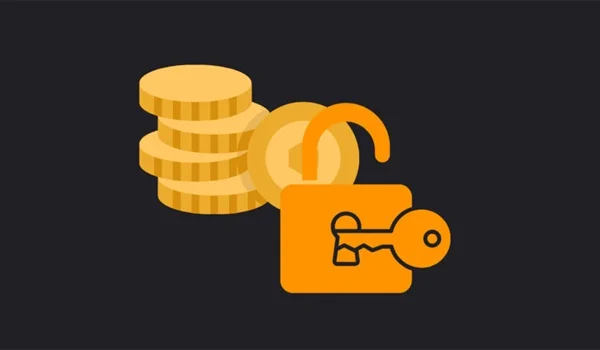
Token locking is often used to prevent large groups of tokens from entering the market immediately after a project’s launch.
Tokens may be allocated to:
- Founders
- Team members
- Early investors
- Advisors
- Ecosystem participants
- Community programs
- Treasury reserves
A vesting schedule can spread these distributions over months or years.
This can help align certain participants with the longer-term development of the project, depending on the structure.
Token Unlock vs Token Minting
These terms are not the same.
Token unlock: Previously created tokens become transferable or available.
Token minting: New tokens are created according to the protocol or token contract.
An unlock can increase the circulating supply without creating new tokens.
This distinction matters when analysing a project’s token economics.
How an Unlock Can Increase Circulating Supply
Suppose a token has:
Current circulating supply: 400 million
Upcoming unlock: 100 million
If all 100 million tokens become part of the circulating supply, the available supply could rise to:
500 million tokens
That represents a 25% increase in circulating supply.
If demand does not increase sufficiently, the additional supply can create selling pressure.
Why Unlocks Can Affect Prices
The basic economic relationship is:
More available supply + unchanged demand → Potential downward price pressure
But this is not a guaranteed outcome.
The effect depends on factors such as:
- Size of the unlock
- Who receives the tokens
- Whether recipients sell
- Market liquidity
- Investor expectations
- Overall crypto-market conditions
- Growth in demand
An unlock creates potential supply, not guaranteed selling.
Not Every Unlocked Token Is Sold
This is one of the most important points.
Suppose 100 million tokens are unlocked.
It does not mean 100 million tokens will immediately be sold.
Recipients may:
- Hold them
- Stake them
- Use them within the ecosystem
- Transfer them
- Sell part of them
- Sell them gradually
Therefore, the market impact depends heavily on what recipients actually do with the unlocked tokens.
Who Receives the Unlocked Tokens?
The identity of the recipients can matter significantly.
An unlock distributed to a project’s ecosystem users may have a different market impact from an unlock distributed to early venture investors.
Investors should therefore examine:
Who gets the tokens?
rather than looking only at:
How many tokens are unlocked?
Investor Unlocks Can Create Selling Pressure
Early investors may have acquired tokens at prices significantly below the public market price.
Suppose an investor received tokens at an average cost of ₹5.
The market price is now ₹50.
The investor has a substantial unrealised gain.
When the tokens unlock, the investor may decide to sell some holdings.
This can create additional supply in the market.
However, whether the investor actually sells depends on their strategy, lock-up terms and market expectations.
Team Unlocks Can Have a Different Meaning
Team tokens are often subject to long vesting schedules.
A team member may not necessarily want to sell immediately after receiving tokens.
They could continue holding them because they believe the project’s long-term value will increase.
Therefore, team unlocks should not automatically be treated as immediate selling events.
Cliff Unlocks vs Linear Unlocks
Token distributions can use different vesting structures.
Cliff Unlock
A large amount becomes available on a specific date.
For example:
100 million tokens unlock on January 1.
This creates a concentrated supply event.
Linear Unlock
Tokens become available gradually.
For example:
10 million tokens unlock every month for 10 months.
This spreads potential selling pressure over a longer period.
The market may react differently to these two structures.
Large Unlocks Can Matter More in Thin Markets
The size of an unlock should be compared with the token’s actual market liquidity.
Suppose:
Daily trading volume: ₹100 crore
Unlock value: ₹500 crore
The unlock is large relative to daily trading activity.
If recipients sell aggressively, the market may struggle to absorb the additional supply.
By contrast, a ₹500 crore unlock in a much deeper market may have a smaller price impact.
Trading volume is not a perfect measure of liquidity, but the comparison provides useful context.
Market Capitalisation Can Hide Future Supply
Consider a token with:
- Circulating supply: 100 million
- Token price: ₹20
Current market cap:
₹2 billion
Now suppose another 400 million tokens are scheduled to unlock.
The future supply is five times the current circulating supply.
The current market cap alone does not fully communicate this future supply situation.
This is why investors often compare market capitalisation with fully diluted valuation (FDV).
Unlocks and Fully Diluted Valuation
A simplified FDV calculation is:
FDV = Token Price × Maximum Supply
Suppose:
- Token price = ₹20
- Maximum supply = 1 billion
- Circulating supply = 100 million
Current market cap:
₹2 billion
FDV:
₹20 billion
The large difference indicates that substantial supply is not currently circulating.
Future unlocks can gradually reduce this gap.
Price Can Fall Even Without a Large Unlock
Token unlocks are only one factor affecting price.
A token can decline because of:
- Broader market weakness
- Reduced demand
- Negative news
- Project problems
- Regulatory developments
- Investor selling
- Poor liquidity
Therefore, seeing a price decline near an unlock date does not prove that the unlock caused the entire decline.
Markets May Price in Future Unlocks
Investors do not always wait until the actual unlock date to react.
If a large unlock is publicly known, traders may anticipate increased supply beforehand.
Some may sell ahead of the event.
Others may adjust their positions based on expected selling pressure.
As a result, price movement can occur before the tokens actually become transferable.
Why Unlock Dates Can Create Volatility
A major scheduled unlock can increase uncertainty.
Traders may speculate about:
- How much will be sold
- Who will sell
- Whether investors will hold
- Whether market makers will absorb the supply
- Whether demand will increase
This can result in increased volatility around the event.
Unlocks Can Also Support Long-Term Growth
Not every token unlock is negative.
Some unlocked tokens may be used to fund:
- Development
- Partnerships
- Ecosystem incentives
- Employee compensation
- Marketing
- Network growth
If these activities create substantial additional demand or utility, the increase in supply may be accompanied by stronger ecosystem activity.
The economic effect therefore depends on what the unlocked tokens are used for.
Supply Growth vs Demand Growth
Consider two situations.
Situation A
Token supply increases by 30%.
Demand increases by only 5%.
The market may experience significant supply pressure.
Situation B
Token supply increases by 30%.
Demand increases by 50%.
The additional supply may be absorbed more easily.
This illustrates an important principle:
Supply should always be analysed together with demand.
Why Vesting Schedules Matter
A vesting schedule tells investors when certain token allocations become available.
Important information can include:
- Initial unlock
- Cliff period
- Monthly or quarterly releases
- Final vesting date
- Percentage allocated to each group
A project with a predictable and gradual schedule may present a different supply profile from one with several large concentrated unlocks.
What Investors Should Check
Before evaluating a token with significant upcoming unlocks, consider:
- How many tokens are unlocking?
- What percentage of circulating supply is that?
- What percentage of maximum supply is being released?
- Who receives the tokens?
- Are recipients likely to sell?
- What is the token’s liquidity?
- What is the current market cap?
- What is the FDV?
- Are more unlocks scheduled later?
- Is demand growing alongside supply?
These questions provide much more context than simply looking at the unlock date.
A Simple Example
Imagine a project has:
Circulating supply: 200 million tokens
Upcoming unlock: 50 million tokens
Token price: ₹10
The unlocked tokens have a theoretical market value of:
50 million × ₹10 = ₹500 million
The circulating supply could rise by:
50 million ÷ 200 million = 25%
If recipients sell a significant portion and demand remains unchanged, the additional supply could put downward pressure on the token.
But if demand is growing rapidly, the market may absorb the new supply.
Final Thoughts
Token unlocks are an important part of cryptocurrency tokenomics because they can significantly change the amount of supply available to the market.
A large unlock does not automatically mean a price crash.
Its impact depends on:
Unlock size + recipient behaviour + market liquidity + investor expectations + demand growth
The most important mistake to avoid is treating every unlocked token as a token that will immediately be sold.
Instead, investors should examine who receives the tokens, how much supply is entering circulation, the project’s future unlock schedule and whether market demand is strong enough to absorb the additional supply.
In simple terms:
An unlock increases potential market supply. The actual price impact depends on what holders do with those tokens and how much demand exists to absorb them.