Why Loan Applications Can Be Rejected Despite a Good Credit Score
A good credit score can strengthen a loan application, but it does not guarantee loan approval.
This is because lenders generally evaluate several aspects of a borrower’s financial profile rather than relying on one number. A person may have a strong credit score but still be considered unsuitable for a particular loan because of income, existing obligations, recent borrowing activity, employment circumstances, loan size or the lender’s internal risk criteria.
Understanding these factors explains why a high credit score and loan approval are not always directly connected.
A Credit Score Is Only One Part of the Decision
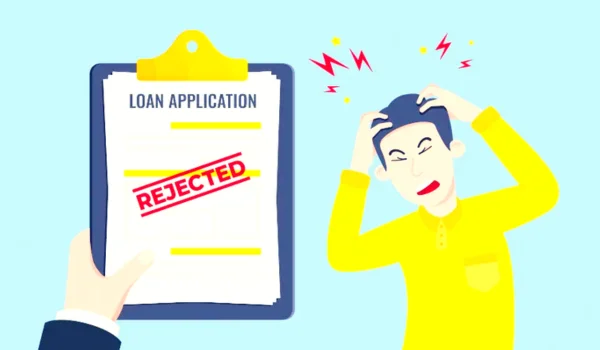
A credit score is designed to summarise aspects of a person’s credit risk.
However, a lender may also examine:
- Income
- Existing debts
- Employment or business stability
- Repayment capacity
- Credit history
- Loan amount
- Loan tenure
- Purpose of borrowing
- Relationship with the lender
- Internal underwriting criteria
Therefore:
Good credit score ≠ guaranteed loan approval
The lender is ultimately assessing whether the proposed loan is suitable for the borrower’s overall financial profile.
High Existing Debt Can Be a Problem
Suppose a borrower has a credit score of 800 but already has several loans.
A lender may calculate the borrower’s existing monthly obligations and compare them with income.
If too much of the borrower’s income is already committed to debt repayment, taking another large loan could increase repayment risk.
The lender may therefore reject or reduce the requested loan amount despite the strong credit score.
Income Matters
Credit scores primarily reflect credit-related information.
They do not necessarily tell a lender how much money a person currently earns.
For example:
Applicant A
- Strong credit score
- Stable high income
- Low existing debt
Applicant B
- Similar credit score
- Low income
- Significant existing obligations
The two applicants may have very different repayment capacities.
A lender can therefore approve one and reject the other.
Loan Amount May Be Too High
A borrower can have an excellent credit profile but request an amount that is too large relative to their income or financial position.
For example, someone may qualify comfortably for a ₹5 lakh loan but not a ₹30 lakh loan.
The credit score does not change simply because the requested loan amount changes.
However, the lender’s assessment of repayment risk can change significantly.
Short or Unstable Employment History
Lenders may consider employment or income stability when assessing certain loan applications.
A borrower with a strong credit score but:
- Recently changed jobs
- Has a short employment history
- Has irregular income
- Has recently become self-employed
may face additional scrutiny depending on the lender’s criteria.
This does not automatically mean rejection, but it can affect eligibility.
Self-Employed Applicants Can Face Different Criteria
Self-employed borrowers may have income patterns that differ from salaried employees.
For example, business income can fluctuate from year to year.
A lender may therefore consider information such as:
- Business income
- Tax records
- Banking transactions
- Business continuity
- Existing liabilities
A strong credit score is useful, but it may not be sufficient to satisfy the lender’s overall underwriting requirements.
Recent Credit Applications
A credit report can show recent credit enquiries.
If a borrower applies for several loans or credit cards within a short period, a lender may interpret the pattern as a possible increase in borrowing needs.
One enquiry does not necessarily indicate a problem.
However, multiple recent applications can become relevant when considered alongside other information.
High Credit Utilisation
Credit utilisation generally refers to the amount of revolving credit being used relative to the available limit.
For example:
Credit limit: ₹2 lakh
Outstanding balance: ₹1.6 lakh
Utilisation: 80%
A high utilisation level can be viewed as a sign of greater dependence on available revolving credit.
Even if the borrower has a good credit score, a lender may consider the overall debt position when evaluating a new application.
The Credit Score May Not Reflect Very Recent Changes
Credit information is reported and updated according to reporting cycles.
This means there can sometimes be a difference between a borrower’s current financial situation and what is reflected in the credit information available to a lender at a particular point in time.
For example, a borrower may have recently:
- Paid off a loan
- Reduced credit card balances
- Closed an account
But the updated information may not yet be reflected in the lender’s available data.
Internal Lending Policies Differ
Different lenders have different risk appetites.
One lender may approve an application while another may decline it.
They can use different:
- Minimum income requirements
- Employment criteria
- Debt thresholds
- Loan-to-income limits
- Internal credit models
- Risk policies
Therefore, rejection by one lender does not necessarily mean that the borrower has a poor credit profile.
The Loan Type Matters
A strong credit score does not guarantee eligibility for every type of loan.
For example, requirements can differ significantly between:
- Personal loans
- Home loans
- Vehicle loans
- Business loans
- Education loans
Each product has its own risk characteristics.
A borrower who qualifies for one product may not qualify for another.
Collateral Can Also Matter
For secured loans, the lender may evaluate the asset being offered as security.
For example, in a property-backed loan, the lender may examine:
- Property value
- Ownership
- Legal title
- Location
- Marketability
- Loan-to-value ratio
A borrower may have a strong credit score but still face a problem if the proposed collateral does not satisfy the lender’s requirements.
Loan-to-Value Ratio Can Affect Approval
Suppose a property is valued at ₹50 lakh.
A borrower requests a ₹48 lakh loan.
Even with an excellent credit score, the lender may not provide the requested amount if it exceeds the applicable LTV or internal lending limits.
The issue is not necessarily the borrower’s creditworthiness.
It can simply be the relationship between the loan amount and the asset value.
Documentation Problems
Loan applications also depend on accurate documentation.
Problems can arise from:
- Incomplete documents
- Income information that cannot be verified
- Differences between application details and supporting records
- Missing financial statements
- Incorrect personal information
A good credit score cannot compensate for an application that does not satisfy the lender’s documentation requirements.
Recent Financial Changes
A borrower’s financial position can change even when their credit score remains strong.
For example:
- Income may have fallen
- A new loan may have been taken
- Employment may have changed
- Business revenue may have declined
- Existing obligations may have increased
The lender evaluates the application based on the information available at the time of assessment.
Why a Good Score Is Still Valuable
None of this means that credit scores are unimportant.
A good credit score can demonstrate a history of responsible credit behaviour and may improve the overall strength of an application.
Depending on the lender and product, a strong credit profile may also contribute to:
- Better eligibility
- More favourable pricing
- Higher approval probability
- Better loan terms
But it remains only one component of the decision.
Credit Score vs Overall Creditworthiness
These terms should not be treated as identical.
Credit score: A numerical indicator derived from credit information.
Overall creditworthiness: A broader assessment of whether the borrower is likely to repay the proposed loan.
Creditworthiness can include:
- Credit score
- Credit history
- Income
- Existing debt
- Repayment capacity
- Employment or business stability
- Loan characteristics
- Other lender-specific factors
This is why an excellent score cannot guarantee approval.
A Simple Example
Consider an applicant with:
- Credit score: 810
- Monthly income: ₹60,000
- Existing EMIs: ₹35,000
- New loan requested: ₹15 lakh
The credit score looks excellent.
However, the lender may conclude that the proposed new EMI would put too much pressure on the applicant’s monthly cash flow.
The application could therefore be rejected or the eligible amount could be reduced.
The rejection would not necessarily indicate a problem with the applicant’s credit history.
What Borrowers Should Check After Rejection
If a loan application is rejected despite a good credit score, the borrower should look beyond the score.
Useful questions include:
- Was my income sufficient for the requested amount?
- How much existing debt do I have?
- Were my documents complete?
- Were there multiple recent credit enquiries?
- Did the loan amount exceed the lender’s limits?
- Did the collateral meet the lender’s requirements?
- Did I satisfy the lender’s employment or income criteria?
- Was there any incorrect information in my credit report?
The answer may reveal that the issue was unrelated to the credit score itself.
Final Thoughts
A good credit score is an important part of a strong credit profile, but it is not a guarantee of loan approval.
Lenders may look at the borrower’s income, existing obligations, repayment capacity, employment or business stability, recent credit activity, documentation, collateral and the specific characteristics of the requested loan.
This is why someone with an excellent credit score can still be rejected while another applicant with a slightly lower score may be approved.
The important lesson is simple:
A credit score measures part of your credit profile; a lender’s decision considers the broader financial risk of the proposed loan.