Secured vs Unsecured Loans: How Collateral Changes Lending Risk
Not all loans carry the same level of risk for the lender.
One of the most important differences is whether the loan is secured by collateral or unsecured.
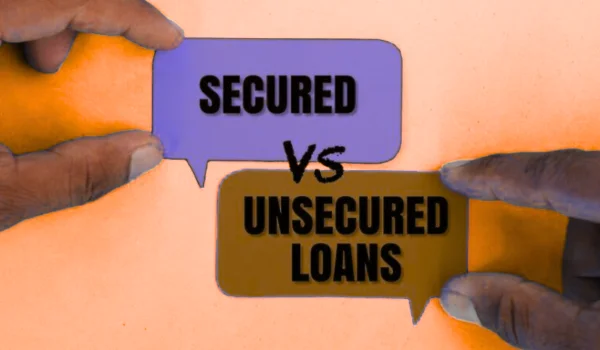
A secured loan is backed by an asset that provides security for the lender, while an unsecured loan does not normally rely on a specific asset as collateral.
This difference can influence the lender’s risk, eligibility requirements, interest rates and recovery options if the borrower fails to repay.
What Is a Secured Loan?
A secured loan is a loan backed by an asset that serves as security for the lender.
Depending on the loan, the collateral could include:
- Property
- Vehicle
- Fixed deposit
- Gold
- Other eligible assets
If the borrower defaults, the lender may have rights to enforce the security according to the loan agreement and applicable law.
Examples include:
- Home loans
- Loan against property
- Vehicle loans
- Gold loans
- Certain loans against deposits or securities
The specific security and enforcement process depends on the product.
What Is an Unsecured Loan?
An unsecured loan generally does not require the borrower to pledge a specific asset as collateral.
Instead, the lender primarily evaluates the borrower’s ability and willingness to repay using factors such as:
- Income
- Credit history
- Credit score
- Existing debt
- Employment or business profile
- Repayment capacity
Common examples include many:
- Personal loans
- Credit cards
- Certain consumer loans
The exact requirements vary by lender and product.
Why Collateral Changes Lending Risk
The key difference is what happens if the borrower does not repay.
Suppose a bank lends ₹10 lakh without collateral.
If the borrower defaults, the lender does not have a specific pledged asset that can be used as security for recovery.
Now consider a ₹10 lakh secured loan backed by an eligible asset.
If the borrower defaults, the lender may have contractual and legal rights to enforce the security, subject to applicable procedures.
The collateral can therefore provide an additional source of recovery.
Secured vs Unsecured Loans
| Factor | Secured Loan | Unsecured Loan |
| Collateral | Usually required | Generally not required |
| Lender’s security | Specific asset | Primarily borrower’s creditworthiness and repayment capacity |
| Lender’s recovery position | May have security over the asset | No specific collateral to enforce |
| Borrower risk | Secured asset may be at risk after default, subject to law and contract | No specific pledged asset, but default can still have serious financial consequences |
| Interest rate | Often lower, depending on product | Often higher |
| Loan amount | Can potentially be higher | Often constrained by income and credit profile |
| Approval | Asset and borrower may both be evaluated | Primarily borrower-focused underwriting |
Why Secured Loans Can Have Lower Interest Rates
Collateral can reduce the lender’s potential loss if the borrower defaults.
Because the lender has security over an asset, the risk profile can be different from an otherwise comparable unsecured loan.
As a result, secured loans may offer lower interest rates.
However, this is not an automatic rule.
Interest rates depend on several factors, including:
- Credit profile
- Loan type
- Tenure
- LTV
- Market conditions
- Asset quality
- Lender’s policies
Why Unsecured Loans Can Cost More
With an unsecured loan, the lender generally has no specific asset pledged as security.
The lender therefore relies more heavily on the borrower’s ability to repay from income or other financial resources.
Because the lender may face greater recovery uncertainty after default, the loan can carry a higher interest rate.
This additional cost compensates, in part, for the higher credit risk.
Collateral Does Not Eliminate Risk
A secured loan is not risk-free for the lender.
The collateral itself can lose value.
For example, a vehicle typically depreciates over time.
A property’s market value can also fall.
There can also be:
- Legal complications
- Selling costs
- Delays in recovery
- Maintenance issues
- Disputes over ownership
- Differences between estimated and actual sale value
Therefore, lenders consider both the borrower and the collateral.
Loan-to-Value Ratio Matters
For many secured loans, lenders do not finance the entire value of the asset.
They may use a Loan-to-Value (LTV) ratio to determine the amount of financing relative to the asset’s value.
For example:
Asset value: ₹50 lakh
Loan: ₹40 lakh
LTV = 80%
The remaining value provides a degree of collateral cushion.
If the asset’s value declines, however, that cushion can become smaller.
Creditworthiness Still Matters for Secured Loans
Having collateral does not mean that a borrower automatically qualifies for a loan.
Lenders can still assess:
- Credit history
- Income
- Existing obligations
- Repayment capacity
- Employment or business stability
- Asset valuation
A secured loan involves both collateral risk and borrower credit risk.
Unsecured Loans Rely More on Credit Assessment
For an unsecured loan, the lender has fewer asset-based recovery options.
Consequently, the borrower’s financial profile becomes particularly important.
For example, the lender may examine:
- Past repayment behaviour
- Current debt
- Income
- Credit utilisation
- Recent credit enquiries
- Existing relationships with lenders
The exact underwriting model varies from one lender to another.
What Happens If a Secured Loan Defaults?
If a borrower stops making payments, the lender may begin the recovery process according to the loan agreement and applicable law.
For a secured loan, this may include enforcement of the security interest over the pledged asset.
However, the lender generally cannot simply take possession of an asset without following the applicable contractual and legal process.
The exact procedure depends on the type of loan, security and jurisdiction.
What Happens If an Unsecured Loan Defaults?
An unsecured loan does not have a specific pledged asset that the lender can directly enforce as collateral.
But that does not mean default has no consequences.
A borrower may face:
- Late payment charges where applicable
- Collection activity
- Damage to credit history
- Difficulty obtaining future credit
- Potential legal recovery proceedings
The consequences depend on the loan agreement and applicable law.
Does Unsecured Mean No Risk to the Borrower?
No.
This is an important misconception.
“Unsecured” refers primarily to the absence of specific collateral backing the loan.
It does not mean that the borrower can stop paying without consequences.
The borrower remains contractually responsible for repayment.
Why Secured Loans Can Offer Larger Amounts
Because the lender has collateral, secured lending can sometimes support larger loan amounts than an otherwise similar unsecured product.
For example, a property-backed loan can involve a much larger amount than many unsecured personal loans.
However, the actual loan amount depends on:
- Asset value
- LTV
- Borrower’s income
- Credit profile
- Repayment capacity
- Lender’s policies
Collateral alone does not determine the amount.
Secured Loans Can Have Longer Tenures
Some secured loans, particularly property-related loans, can have relatively long repayment periods.
A longer tenure can reduce the monthly EMI but may increase the total interest paid.
Therefore, borrowers should evaluate the full repayment cost rather than focusing only on the availability of collateral.
Why Lenders Prefer Collateral in Some Situations
From the lender’s perspective, collateral can provide an additional recovery mechanism.
Imagine two borrowers with similar income and credit profiles.
One offers acceptable collateral.
The other does not.
The secured borrower may be eligible for a different loan structure because the lender has an asset supporting the exposure.
This does not guarantee approval or a lower interest rate, but it can change the lender’s risk assessment.
Collateral Quality Matters
Not every asset provides the same level of security.
Lenders may consider:
- Marketability
- Liquidity
- Valuation stability
- Ownership
- Legal title
- Depreciation
- Ease of enforcement
For example, an asset that is difficult to sell may provide less practical protection than a highly liquid asset of similar value.
Secured vs Unsecured: Which Is Better?
There is no universal answer.
A secured loan may be attractive when:
- You need a larger amount
- You have suitable collateral
- You want potentially lower borrowing costs
- You are comfortable pledging an asset
An unsecured loan may be preferable when:
- You do not want to pledge an asset
- You need a relatively smaller amount
- You qualify based on income and creditworthiness
- You value a simpler collateral structure
The right choice depends on the borrower’s financial circumstances and the specific loan terms.
Final Thoughts
The biggest difference between secured and unsecured loans is how the lender’s risk is protected.
A secured loan is backed by collateral, giving the lender a specific asset that may provide an additional recovery source if the borrower defaults, subject to the applicable legal and contractual process.
An unsecured loan generally relies more heavily on the borrower’s creditworthiness and repayment capacity.
Collateral can therefore reduce certain aspects of lender risk, potentially allowing for larger loan amounts, longer tenures or lower interest rates, depending on the product.
But secured borrowing comes with an important trade-off:
If you pledge an asset as security, that asset can be exposed to enforcement if you fail to repay the loan.
Ultimately, the most important comparison is not simply secured versus unsecured. Borrowers should examine the interest rate, total repayment, tenure, fees, collateral requirements and consequences of default before choosing a loan.