Why Does Homemade Pickle Develop White Layer? Causes and What to Do
Homemade pickle is a traditional favourite in many Indian households. Whether it is mango, lemon, chilli, mixed vegetable or garlic pickle, proper oil, salt, spices and storage are important for keeping it fresh for a long time. However, one common problem many people notice is a white layer developing on the surface of the pickle.
A white layer does not always mean that the entire pickle has gone bad. In some cases, it can be caused by salt or oil separation, while in other cases it may indicate yeast or mould growth. Understanding the difference is important before deciding whether the pickle can still be used.
What Does a White Layer on Pickle Mean?
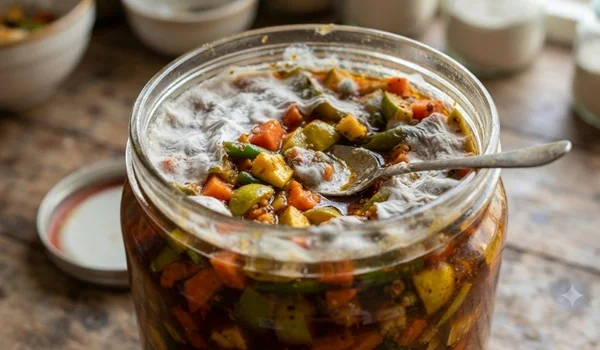
A white layer can appear as a thin film, small white spots, powdery coating or fuzzy patches on the surface. Its appearance alone is not enough to identify the cause.
There are generally three possibilities:
- Salt or spice deposits
- Fermentation-related yeast growth
- Mould or fungal growth
The texture, smell, colour and spread of the layer can provide useful clues. However, when there is clear evidence of mould or spoilage, it is safer not to consume the pickle.
- Salt Crystals Can Form a White Layer
One of the simplest explanations is salt crystallisation. Pickles usually contain a considerable amount of salt. When moisture moves around inside the jar or evaporates from the surface, salt can crystallise and appear as white grains or a thin whitish coating.
Salt deposits are usually:
- Crystalline or grainy
- Dry rather than fuzzy
- Not associated with a strong rotten smell
- More noticeable around the surface or sides of the jar
This type of white layer is different from fuzzy mould.
- Oil and Ingredients May Separate
Oil is an important preservation ingredient in many Indian pickles. During storage, oil can move away from the solid ingredients and collect at the top or sides.
Spices, salt and other ingredients can also settle or separate. When these materials dry on the surface, they may create a pale or whitish appearance.
This does not automatically mean the pickle is spoiled. However, separation can expose some pickle pieces to air, which may increase the risk of microbial growth.
- Yeast Can Cause a White Film
A thin white film can sometimes be associated with yeast, particularly in pickles that contain moisture and undergo fermentation.
Yeast growth may look like:
- A thin, smooth or cloudy film
- Small pale patches
- A surface coating rather than deep fuzzy growth
Fermentation can also produce changes in smell, taste and texture. Not every fermented pickle is unsafe, but unexplained changes should be treated carefully.
If the pickle has developed an unusual smell, bubbling, excessive liquid, sliminess or other signs of spoilage, it is better to avoid eating it.
- Mould Is a More Serious Concern
A white layer can also be the early appearance of mould. Mould may later become green, blue, grey, black or other colours. It can sometimes look fuzzy or cotton-like.
Mould is more likely when:
- The pickle has been exposed to air
- Moisture has entered the jar
- The ingredients were not sufficiently dried
- The jar or spoon was wet or contaminated
- The oil level does not adequately cover the pickle
- The pickle is stored in unsuitable conditions
If visible mould is present, simply removing the affected top portion is not necessarily a reliable way to make the remaining pickle safe.
Why Does Homemade Pickle Develop a White Layer?
Several factors can contribute to the problem.
Excess Moisture
Moisture is one of the biggest enemies of homemade pickle. Fruits, vegetables, jars, lids and spoons must be properly dry before preparation and storage.
Even a small amount of unwanted water can create conditions that support microbial growth.
Wet Spoon
Using a wet spoon to take pickle from the jar can introduce water and microorganisms. Repeated exposure can eventually lead to spoilage.
Always use a clean and completely dry spoon.
Improperly Dried Ingredients
Before making pickle, ingredients such as mangoes, lemons, chillies or vegetables should be cleaned and thoroughly dried according to the recipe.
Surface moisture left on the ingredients can reduce shelf life.
Insufficient Salt
Salt helps control unwanted microbial activity in many traditional pickles. If a recipe requires a particular amount of salt, reducing it significantly can affect preservation.
However, adding large amounts of salt after spoilage has already occurred does not necessarily make the pickle safe.
Insufficient Oil
For oil-based pickles, the oil helps create a barrier between the pickle and air. If pieces remain exposed above the oil for long periods, surface spoilage can become more likely.
The required oil quantity depends on the specific pickle recipe, so it is better to follow a tested recipe rather than adding oil randomly.
Poor Storage
High temperatures, humidity, frequent opening and direct sunlight can affect homemade pickle quality.
A clean, dry, properly sealed container stored according to the recipe can help extend shelf life.
What Should You Do If You See a White Layer?
The first step is do not immediately mix the white layer into the pickle. Examine it carefully.
If it appears to be dry salt crystals or ingredient residue, the situation may be different from visible fuzzy growth.
If you see fuzzy patches, coloured mould, an unpleasant rotten smell, unusual sliminess or significant changes in appearance, the safer choice is to discard the pickle rather than trying to rescue it.
Do not taste the pickle simply to determine whether it is safe.
Should You Remove the White Layer and Eat the Pickle?
This depends on what the layer actually is.
If it is clearly identified as salt crystallisation or harmless ingredient residue, it may not indicate spoilage. But if there is uncertainty about whether it is mould or microbial growth, eating the pickle is not worth the risk.
In particular, simply scraping off visible mould does not guarantee that the rest of a moist food is safe, because contamination can extend beyond what is visible.
How to Prevent White Layer Formation
Prevention is easier than dealing with spoiled pickle. Follow these practices:
Keep Everything Completely Dry
Dry the ingredients, utensils, jar and lid thoroughly before use. Avoid introducing unnecessary water during preparation.
Use a Clean, Dry Spoon
Never use a wet or dirty spoon to remove pickle. This is especially important when the jar will be stored for several weeks or months.
Use the Correct Salt and Oil
Follow the quantities specified in a reliable pickle recipe. Changing the proportions substantially can affect preservation and storage life.
Store in a Suitable Container
A clean, dry, food-safe glass jar is commonly used for homemade pickle. Keep the container properly closed when not in use.
Avoid Frequent Exposure to Air
Open the jar only when necessary and close it promptly after taking out the pickle.
Keep the Pickle Properly Covered
For oil-based pickles, make sure the pickle remains adequately covered with oil as recommended by the recipe. If ingredients remain exposed, spoilage can occur more easily.
Final Thoughts
A white layer on homemade pickle does not always mean that the pickle has spoiled. Salt crystals, ingredient deposits and separation can sometimes create a harmless white appearance, while yeast or mould can indicate a preservation or storage problem.
The most important clues are the appearance, texture, smell and other signs of spoilage. When the layer is fuzzy, spreading, coloured or accompanied by an unpleasant smell or unusual texture, it is safer to discard the pickle. Proper drying, adequate salt and oil, clean utensils and suitable storage can greatly reduce the chances of developing a white layer in homemade pickle.