Loan Tenure vs Total Interest: Why Longer Tenure Can Increase the Cost
When taking a loan, borrowers often focus on the monthly EMI. A longer tenure can make the EMI look more affordable because the repayment is spread over a larger number of months.
However, there is an important trade-off:
Longer tenure can reduce the monthly EMI but increase the total interest paid over the life of the loan.
This is because interest continues to accumulate while the loan remains outstanding.
What Is Loan Tenure?
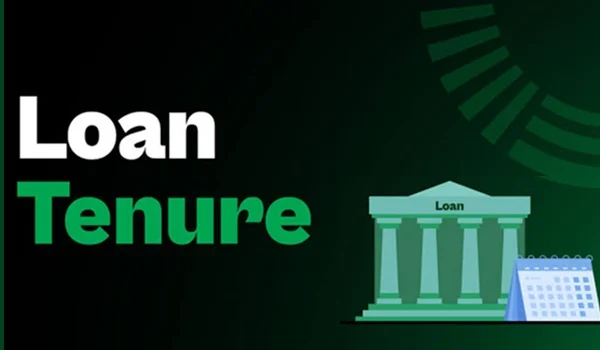
Loan tenure is the period over which the borrower is scheduled to repay the loan.
For example, a loan could have a tenure of:
- 1 year
- 3 years
- 5 years
- 10 years
- 20 years
The appropriate tenure depends on the type of loan, loan amount, interest rate and borrower’s repayment capacity.
Why Longer Tenure Reduces EMI
Suppose someone borrows ₹5 lakh.
If the loan has a short repayment period, the borrower has fewer months to repay the principal.
This generally results in a higher monthly EMI.
If the same loan is spread over a longer period, the principal is divided across more monthly payments.
As a result, the EMI can become lower.
This can make a longer-tenure loan easier to manage from a monthly cash-flow perspective.
But lower EMI does not automatically mean lower borrowing cost.
The Total Interest Trade-Off
Interest is generally charged while the loan remains outstanding.
With a longer tenure, the borrower may keep the loan outstanding for a longer period.
Therefore, even though the monthly EMI is lower, the total interest paid can be higher.
This is especially noticeable with long-term loans.
A Simple Example
Consider a hypothetical ₹5 lakh loan at an annual interest rate of 10%, using a reducing-balance structure.
Option A: 3-Year Tenure
- Loan amount: ₹5 lakh
- Interest rate: 10%
- Tenure: 3 years
- EMI: approximately ₹16,134
- Total repayment: approximately ₹5.81 lakh
- Total interest: approximately ₹81,000
Option B: 5-Year Tenure
- Loan amount: ₹5 lakh
- Interest rate: 10%
- Tenure: 5 years
- EMI: approximately ₹10,625
- Total repayment: approximately ₹6.38 lakh
- Total interest: approximately ₹1.38 lakh
The 5-year loan has a significantly lower EMI.
But the borrower pays considerably more interest overall.
These figures are illustrative and exclude fees, taxes and other charges.
Lower EMI Can Have a Higher Long-Term Cost
This creates an important financial trade-off.
Shorter tenure:
Higher EMI → Faster principal repayment → Lower total interest
Longer tenure:
Lower EMI → Slower principal repayment → Higher total interest
The exact difference depends on the loan amount, interest rate, repayment structure and other terms.
Why Interest Keeps Accumulating
Consider a reducing-balance loan.
At the beginning, the outstanding principal is relatively high.
As the borrower makes payments, the outstanding principal decreases.
Interest is then calculated on the remaining balance.
If the borrower chooses a longer tenure, the principal generally declines more slowly.
That means the borrower continues paying interest over a longer period.
Loan Tenure and Total Repayment
Borrowers should distinguish between:
Monthly EMI and Total repayment
The EMI tells you how much you are scheduled to pay each month.
Total repayment tells you how much you are expected to pay over the entire loan period, before considering changes such as prepayments or other applicable charges.
For comparing loan costs, total repayment is often much more informative than EMI alone.
Why Longer Tenure Can Still Make Sense
A longer tenure is not necessarily a bad financial decision.
There can be valid reasons for choosing one.
For example:
- Lower monthly cash-flow burden
- Greater flexibility in the household budget
- Keeping an emergency reserve intact
- Avoiding an excessively high EMI
- Managing other financial commitments
A borrower may deliberately choose a longer tenure and later make permitted prepayments if their financial situation improves.
The decision depends on the borrower’s circumstances.
The Risk of Choosing an EMI That Is Too High
A short tenure can save interest, but it also creates a higher monthly obligation.
If the EMI becomes difficult to manage, the borrower may face:
- Missed payments
- Late charges
- Financial stress
- Reduced savings
- Greater dependence on other forms of credit
Therefore, minimizing total interest should not be the only objective.
A sustainable EMI is also important.
Longer Tenure and Inflation
Inflation can complicate the comparison.
Over a long period, the purchasing power of money generally changes.
A fixed EMI may feel less burdensome in future if income increases over time.
However, this does not eliminate the additional interest cost.
The borrower still needs to compare the financial cost of extending the tenure with the potential benefit of lower monthly payments.
Loan Tenure and Prepayment
Prepayment can potentially reduce the total interest on a reducing-balance loan because it reduces the outstanding principal earlier.
For example, if a borrower receives a bonus and uses part of it to reduce the principal, future interest may be calculated on a smaller outstanding balance.
The actual savings depend on:
- Loan terms
- Prepayment amount
- Timing of prepayment
- Remaining tenure
- Interest rate
- Applicable charges
Borrowers should check their loan agreement before making assumptions about prepayment benefits.
Shorter Tenure vs Longer Tenure
| Factor | Shorter Tenure | Longer Tenure |
| Monthly EMI | Usually higher | Usually lower |
| Principal repayment | Faster | Slower |
| Total interest | Usually lower | Usually higher |
| Total repayment | Usually lower | Usually higher |
| Monthly cash-flow pressure | Higher | Lower |
| Loan-free sooner | Yes | No |
| Flexibility | Lower monthly flexibility | Higher monthly flexibility |
Why Comparing EMI Alone Can Be Misleading
Imagine two lenders offering the same loan.
Lender A: ₹20,000 EMI
Lender B: ₹15,000 EMI
At first glance, Lender B may appear better.
But what if:
- Lender A’s tenure is 3 years
- Lender B’s tenure is 5 years
The second loan may require significantly more total repayment despite having a lower monthly EMI.
This is why borrowers should always ask:
“How much will I pay in total?”
Interest Rate Also Matters
Tenure is only one part of the calculation.
A longer-tenure loan at a lower interest rate may sometimes have a different cost profile from a shorter-tenure loan at a much higher rate.
Therefore, compare:
- Principal
- Interest rate
- Interest calculation method
- Tenure
- EMI
- Total interest
- Total repayment
- Fees and charges
Looking at only one factor can produce an incomplete comparison.
Long Tenure Can Be More Significant for Large Loans
The impact of tenure can become substantial when the loan amount is large.
For example, mortgages and other long-term loans may remain outstanding for many years.
Even a small difference in interest rate or tenure can therefore result in a significant difference in total interest.
This is why borrowers should carefully evaluate the repayment period before accepting a long-term loan.
The Right Tenure Depends on Repayment Capacity
There is no universally ideal loan tenure.
A borrower with strong monthly cash flow may prefer a shorter tenure to reduce total interest.
Another borrower may prioritize a lower EMI because they have variable income or other financial obligations.
The best choice is one that balances:
Affordable EMI + manageable financial risk + reasonable total borrowing cost
Final Thoughts
Loan tenure has a direct impact on the total cost of borrowing.
A longer tenure generally reduces the monthly EMI but increases the period over which interest is charged, which can result in substantially higher total interest.
A shorter tenure generally works in the opposite direction: the EMI is higher, but the principal is repaid faster and total interest is usually lower.
Before selecting a loan tenure, don’t look only at the EMI.
Compare the interest rate, repayment method, total interest, total repayment, fees and your own ability to comfortably make the payments.
The cheapest loan is not always the one with the lowest EMI. Sometimes, a lower monthly payment simply means you are paying for the loan for much longer.