Jurisdiction vs Venue: Why Courts Can Have Different Roles in the Same Dispute
When a legal dispute reaches court, two questions often become important:
Does this court have the legal authority to hear the case?
and
Is this the appropriate place for the case to be heard?
These questions relate to jurisdiction and venue.
Although the terms are sometimes used interchangeably in everyday conversations, they describe different legal concepts. A court may have jurisdiction over a dispute while the case is still subject to a venue question.
Understanding the distinction becomes particularly important when parties live in different locations, when a dispute involves property in another area, or when a contract specifies where disputes should be handled.
What Is Jurisdiction?
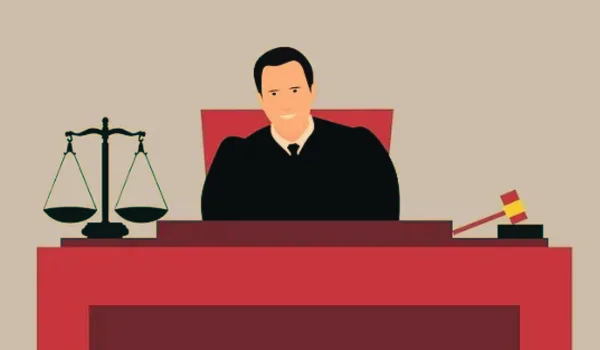
Jurisdiction refers broadly to a court’s legal authority to hear and decide a particular matter.
A court’s jurisdiction can involve several dimensions, including:
- Authority over the type of case
- Authority over the parties
- Authority based on location
- Authority over particular property
- Authority to issue a particular type of order
The exact categories and terminology vary between legal systems.
What Is Venue?
Venue generally concerns the appropriate geographical location or court where a case should be heard.
For example, several courts may potentially have jurisdiction over a dispute, but procedural rules may determine which location is the proper or preferred venue.
Venue is therefore more closely connected to where the case should be litigated.
The Simplest Difference
A useful way to remember the distinction is:
Jurisdiction = Does the court have legal authority?
Venue = Is this the proper location for the case?
However, this is a simplified explanation. The exact rules depend on the jurisdiction and type of proceeding.
A Simple Example
Suppose a company based in Delhi enters into a contract with a company based in Mumbai.
The contract is performed partly in both cities.
A dispute later arises.
Several courts may potentially have a connection to the dispute.
The jurisdiction question asks whether a particular court has legal authority to hear the matter.
The venue question asks whether that court or location is the appropriate place for the proceedings under the applicable rules.
Subject-Matter Jurisdiction
Subject-matter jurisdiction concerns the court’s authority over the type of dispute.
For example, some courts may have specialised authority over particular matters.
Depending on the legal system, different courts may handle:
- Criminal matters
- Civil disputes
- Family matters
- Tax disputes
- Administrative matters
- Commercial disputes
- Constitutional issues
A court cannot necessarily hear every type of legal dispute simply because the parties are located within its geographical area.
Personal Jurisdiction
Personal jurisdiction generally concerns a court’s authority over the parties involved.
For example, a court may need a legally sufficient connection to the defendant before exercising authority over that defendant.
The rules differ significantly between jurisdictions.
In some situations, residence, business activity, consent or conduct within a territory can be relevant.
Territorial Jurisdiction
Territorial jurisdiction concerns the geographical area within which a court can exercise its authority.
For example, a court may have authority over disputes connected to a particular state, district or other geographic area.
The exact boundaries depend on the country’s judicial structure.
Jurisdiction Over Property
Some disputes are closely connected to specific property.
For example, a case involving rights in immovable property may be subject to special jurisdictional rules based on where that property is located.
The applicable rules depend on the type of property and proceeding.
Why Jurisdiction Matters More Fundamentally
If a court lacks jurisdiction over a matter, simply choosing that court as the venue does not normally give it legal authority.
In other words:
A convenient location cannot automatically create jurisdiction.
The court must have authority under the applicable legal framework.
Venue Can Sometimes Be Changed
Venue can sometimes be transferred when the law allows it.
For example, a court may determine that another location is more appropriate because:
- Witnesses are located there
- Relevant documents are there
- The underlying events occurred there
- The parties have a stronger connection to that location
- Another court is more convenient
The specific grounds and procedure vary by jurisdiction.
Forum Non Conveniens
In some legal systems, courts can decline to hear a case even when jurisdiction exists if another forum is significantly more appropriate.
This concept is commonly associated with forum non conveniens.
The court may consider factors such as:
- Convenience of the parties
- Location of witnesses
- Access to evidence
- Applicable law
- Efficiency
- Interests of justice
The doctrine is jurisdiction-specific and does not operate identically everywhere.
Contractual Choice of Forum
Contracts sometimes contain clauses specifying where disputes should be resolved.
For example:
“Any dispute arising from this agreement shall be subject to the courts of Mumbai.”
Such clauses can affect venue and, depending on the wording and applicable law, may also influence jurisdictional questions.
However, a contractual clause does not automatically override every statutory or constitutional jurisdictional requirement.
Exclusive vs Non-Exclusive Clauses
A contract may specify that disputes must be brought in a particular forum, or it may simply identify a forum that the parties agree can hear disputes.
These are not necessarily the same.
The exact wording of the clause matters.
Courts may also examine whether the clause is legally enforceable.
Jurisdiction and Venue in Online Disputes
Digital transactions make these issues more complicated.
Imagine:
- A customer lives in Delhi.
- A company is incorporated elsewhere.
- Its servers are located in another country.
- Payment is processed through another location.
- The contract contains a forum-selection clause.
Which court should hear the dispute?
The answer cannot be determined simply by asking where the website can be accessed.
Courts may consider statutory rules, contractual terms, the parties’ connections and the nature of the dispute.
Multiple Courts Can Sometimes Be Involved
A dispute may have connections with multiple locations.
For example:
Party A: Delhi
Party B: Mumbai
Contract signed: Bengaluru
Performance: Hyderabad
Property involved: Pune
Different legal rules may determine which courts have jurisdiction and which location is the proper venue.
This is why jurisdictional analysis can become complicated in commercial disputes.
Jurisdiction vs Venue
| Feature | Jurisdiction | Venue |
| Basic question | Does the court have legal authority? | Is this the proper location? |
| Main focus | Legal power of the court | Geographic or procedural appropriateness |
| Can it depend on parties? | Yes | Yes |
| Can it depend on subject matter? | Yes | Sometimes |
| Can it be challenged? | Yes | Yes |
| Can venue sometimes be transferred? | Rules vary | Often possible where law permits |
| Contractual forum clause relevant? | Potentially | Often relevant |
A Venue Problem Does Not Always Mean a Jurisdiction Problem
Suppose two courts have authority over a particular dispute.
The defendant may argue that the case should be heard in another location because that venue is more appropriate.
That does not necessarily mean the original court lacks jurisdiction.
The argument may simply concern where the case should proceed.
This distinction can affect how the court handles the objection.
A Jurisdiction Problem Can Be More Fundamental
If a court genuinely lacks jurisdiction, the problem can be more fundamental than a venue dispute.
For example, a court may not have authority over the subject matter at all.
In such circumstances, moving the case to a different courtroom within the same jurisdiction may not solve the problem.
The case may need to be brought before a court that actually has the required authority.
Courts Can Have Different Roles in the Same Dispute
Sometimes multiple courts can become involved at different stages.
For example:
- One court may hear the original dispute.
- Another court may hear an appeal.
- A higher court may review a legal question.
- A different court may handle enforcement in circumstances permitted by law.
These courts do not necessarily have identical jurisdiction.
Their roles can arise from different procedural rules.
Original vs Appellate Jurisdiction
Another important distinction is between original jurisdiction and appellate jurisdiction.
Original jurisdiction
A court hears a matter at the initial stage.
Appellate jurisdiction
A higher or otherwise authorised court reviews a decision made by another court or tribunal.
A court with appellate jurisdiction is not simply another venue for starting the same case.
Its role is determined by the applicable legal framework.
Jurisdiction in Federal Systems
Jurisdiction and venue can become particularly complex in countries with federal systems.
For example, the United States has federal and state courts with different areas of authority.
A case may potentially involve:
- State jurisdiction
- Federal jurisdiction
- Different federal districts
- Different state courts
The rules governing jurisdiction and venue are detailed and depend on the type of dispute.
Jurisdiction in India
India also has a structured court system in which jurisdiction can depend on factors such as:
- Subject matter
- Territorial connection
- Pecuniary limits
- Nature of the proceeding
- Statutory provisions
Civil and criminal matters also operate under different procedural frameworks.
Therefore, determining the appropriate court requires looking at the specific dispute and applicable law.
Why Parties Challenge Jurisdiction and Venue
A defendant may raise a jurisdiction or venue objection for several reasons.
For example:
- The court lacks authority over the subject matter.
- The court lacks authority over the defendant.
- The case was filed in an improper location.
- A contract requires disputes to be handled elsewhere.
- Another forum is legally or practically more appropriate.
Such objections can sometimes be raised early in the proceedings.
Does Filing in the Wrong Venue Automatically End the Case?
Not necessarily.
The consequences depend on the applicable procedural law.
Possible outcomes can include:
- Transfer of the case
- Dismissal in certain circumstances
- Permission to continue
- Modification of the proceedings
- Another procedural remedy
A venue problem should therefore not automatically be treated as equivalent to a complete loss of the underlying legal claim.
Why the Difference Matters
Understanding jurisdiction and venue helps explain why a court can have authority over a dispute while the parties still argue about where it should be heard.
It also explains why:
“This court is inconvenient”
and
“This court has no legal authority”
are two very different arguments.
The first may involve venue.
The second may involve jurisdiction.
Final Thoughts
Jurisdiction and venue answer different legal questions.
Jurisdiction is primarily concerned with a court’s legal authority to hear and decide a matter.
Venue is generally concerned with the appropriate geographical or procedural location for the case.
A dispute can have connections to multiple locations, and more than one court may potentially have some form of authority depending on the applicable law.
The key takeaway is:
Jurisdiction determines whether a court can hear the dispute; venue generally determines where the dispute should be heard.
Because jurisdictional and venue rules vary considerably by country, court system and type of case, the exact answer always depends on the specific facts, applicable procedural rules and any valid contractual forum-selection provisions.