Underwriting Risk vs Medical Risk: Why Insurance Decisions Can Differ
When an insurance company reviews an application, the final decision is not always based on a person’s medical condition alone.
A medical condition is one part of the information an insurer may consider. Underwriting risk is broader and refers to the insurer’s overall assessment of the likelihood and potential financial impact of future claims.
This is why two people with similar medical reports can sometimes receive different insurance decisions, while people with different medical histories may receive similar terms.
Understanding the difference helps explain why insurance underwriting can sometimes produce unexpected outcomes.
What Is Medical Risk?
Medical risk generally refers to the possibility that a person’s health condition or medical history may result in future healthcare-related claims or other insured events, depending on the type of insurance.
Insurers may consider information such as:
- Existing medical conditions
- Previous illnesses
- Medical procedures
- Treatment history
- Medical test results
- Medications
- Relevant health history
The importance of each factor depends on the type of insurance and the insurer’s underwriting criteria.
What Is Underwriting Risk?
Underwriting risk is a broader concept.
It refers to the insurer’s assessment of whether the overall risk presented by an applicant is consistent with the terms and pricing of the insurance product.
Medical information may be part of this assessment, but underwriting can also consider other relevant factors.
Depending on the insurance product, these may include:
- Age
- Occupation
- Lifestyle information
- Smoking or nicotine use
- Alcohol use
- Hazardous activities
- Previous insurance history
- Coverage amount
- Policy duration
- Financial information where relevant
Not every factor applies to every insurance policy.
Medical Risk Is Only One Part of Underwriting

A useful way to understand the relationship is:
Medical information → Medical risk assessment
Medical + non-medical information → Overall underwriting assessment
An applicant may have a relatively favorable medical profile but still present another risk factor that affects the underwriting decision.
Similarly, a medical issue may not automatically lead to rejection if the insurer determines that the risk can be accommodated under different terms.
Why Two Similar Medical Reports Can Produce Different Decisions
Suppose two applicants have similar medical test results.
One insurer may consider the overall risk acceptable at standard rates.
Another insurer may apply an additional premium or request more information.
This can happen because insurers can have different:
- Underwriting guidelines
- Risk models
- Historical claims experience
- Risk appetites
- Product designs
- Internal thresholds
Therefore, a different underwriting decision does not necessarily mean that one medical report is incorrect.
Medical Tests Do Not Tell the Whole Story
Medical tests provide specific information at a particular point in time.
Underwriting can involve a wider set of information.
For example, an insurer may evaluate:
- Test results
- Medical history
- Age
- Previous treatment
- Declared habits
- Occupation
- Other application information
The insurer may consider the combined risk profile, rather than relying on one test result in isolation.
Why Current Health and Historical Information Can Both Matter
An applicant may currently have normal test results but have a relevant medical history.
Depending on the product and underwriting rules, the insurer may consider both current and historical information.
For example, a person may have recovered from a previous condition and currently show normal results.
The current result may be favorable, but the previous medical event could still be relevant to the underwriting assessment.
This does not automatically determine the outcome. The insurer’s guidelines and the specific circumstances matter.
Lifestyle Risk Can Be Separate From Medical Risk
Certain lifestyle factors can be considered independently of medical test results.
For example, depending on the insurance product, underwriting may consider:
- Tobacco or nicotine use
- Alcohol consumption
- Participation in hazardous sports
- Adventure activities
- High-risk occupations
An applicant may have normal medical reports but still receive different terms if the insurer considers a declared lifestyle factor relevant to future risk.
What About Nicotine or Smoking?
Nicotine-related underwriting can illustrate the distinction clearly.
An applicant may have a medical report showing no current medical abnormality associated with smoking.
However, if the application indicates tobacco or nicotine use, the insurer may consider that information separately when assessing risk.
Therefore:
Normal medical results do not necessarily mean every non-medical underwriting factor is automatically treated as standard risk.
The exact treatment depends on the insurer’s rules and the information available during underwriting.
Underwriting Decisions Can Include More Than Premium Changes
An insurer’s underwriting decision may take different forms.
Depending on the product and circumstances, an insurer may:
- Accept the application at standard terms
- Apply an additional premium
- Add specific exclusions or restrictions
- Request additional information
- Request further medical examination
- Offer modified terms
- Decline the application
The available options depend on the insurer and policy.
Why One Insurer May Accept a Risk While Another Does Not
Different insurers may have different views about the same risk.
For example, one insurer may be comfortable accepting a particular medical history at standard pricing.
Another may consider the same history significant enough to require additional premium.
A third insurer could potentially apply a different condition.
This is because insurance underwriting is based partly on the insurer’s own assessment of expected risk.
Underwriting Risk Is Not the Same as Actual Illness
Another important distinction is that an underwriting decision does not necessarily mean the applicant is currently unhealthy.
An insurer may classify an applicant as presenting a higher underwriting risk because of the potential probability or financial impact of future claims.
Risk assessment is therefore about future uncertainty, not simply diagnosing a current medical condition.
For example, two people may both be currently healthy but have different risk profiles based on age, occupation or other relevant factors.
Why Insurance Companies Look at Probability
Insurance pricing is based heavily on probability.
An insurer is not asking only:
“Is this person healthy today?”
It may also be asking:
“Based on the information available, how does this applicant’s expected risk compare with the assumptions used to price this policy?”
That difference is central to underwriting.
Medical Risk vs Underwriting Risk
| Factor | Medical Risk | Underwriting Risk |
| Main focus | Health-related risk | Overall insurance risk |
| Medical history | Important | May be considered |
| Medical tests | Important | May be considered |
| Lifestyle | Usually not the entire focus | May be relevant |
| Occupation | Generally separate | May be relevant |
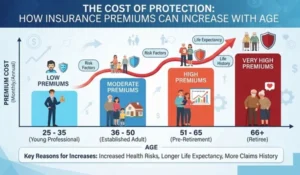
| Age | Medical relevance may exist | Often relevant |
| Coverage amount | Not a medical factor | Can influence overall risk |
| Final insurance decision | Contributes to decision | Broader decision-making framework |
Why Applicants Should Ask for Clarification
If the final insurance terms are different from what the applicant expected, it is reasonable to ask the insurer for clarification.
For example, an applicant can ask:
- What specific factor affected the underwriting decision?
- Was the decision based on medical information, non-medical information or both?
- Was an additional premium applied?
- What percentage or amount was added?
- Was any exclusion introduced?
- Which information was considered during underwriting?
- Can the insurer explain the reason for the revised terms?
Clear answers can help distinguish between a medical concern and a broader underwriting assessment.
Underwriting Decisions Should Be Read Alongside the Policy Terms
An applicant should not assume that the final premium tells the whole story.
If the insurer changes the terms, the customer should review the final documents carefully for:
- Additional premium
- Exclusions
- Waiting periods
- Riders
- Coverage limitations
- Policy conditions
A small premium increase may have a very different impact from a significant exclusion.
Final Thoughts
Medical risk and underwriting risk are closely connected, but they are not the same thing.
Medical risk focuses primarily on health-related factors, while underwriting risk represents the insurer’s broader assessment of the applicant’s overall risk.
This explains why two people with similar medical reports can sometimes receive different insurance terms.
It also explains why a normal medical report does not necessarily guarantee standard underwriting. Insurers may consider other relevant factors such as age, occupation, lifestyle information, coverage amount and previous history, depending on the product.
Ultimately, an insurance decision is based on the overall risk profile, not necessarily on one medical test or one individual factor.