Debt-to-Income Ratio: What It Reveals About Financial Stability
A person can have a good salary and still face financial pressure if a large portion of that income goes toward debt payments.
This is where the Debt-to-Income Ratio (DTI) becomes useful.
DTI compares a person’s regular debt payments with their gross income. Lenders often use it to assess how much of a borrower’s income is already committed to debt and whether taking on additional debt could create repayment pressure.
However, DTI is not a complete measure of financial health. It is one indicator that should be considered alongside savings, expenses, assets, credit history and income stability.
What Is the Debt-to-Income Ratio?
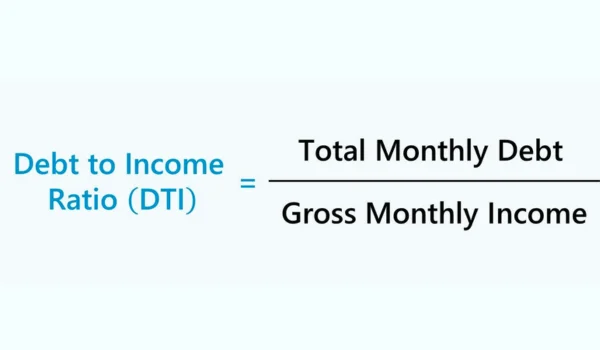
The Debt-to-Income Ratio measures monthly debt obligations as a percentage of gross monthly income.
A simplified formula is:
DTI = Total Monthly Debt Payments ÷ Gross Monthly Income × 100
For example, suppose someone earns ₹1,00,000 per month before applicable deductions and has monthly debt payments of ₹30,000.
The DTI would be:
₹30,000 ÷ ₹1,00,000 × 100 = 30%
This means 30% of the person’s gross monthly income is committed to debt payments included in the calculation.
What Counts as Debt?
The exact debts included in a DTI calculation can vary between lenders and financial products.
Common examples may include:
- Home loan payments
- Personal loan payments
- Vehicle loan payments
- Education loan payments
- Credit card obligations
- Other recurring debt payments
Not every household expense is normally treated as debt for DTI purposes.
For example, groceries, electricity bills and entertainment expenses are important for budgeting but are generally not considered debt obligations in a standard DTI calculation.
Gross Income vs Take-Home Income
DTI is commonly calculated using gross income, meaning income before deductions such as taxes and certain payroll deductions.
This is different from take-home pay.
For example:
Gross monthly income = ₹1,00,000
Take-home income = ₹80,000
If monthly debt payments are ₹25,000, a gross-income DTI calculation would be:
₹25,000 ÷ ₹1,00,000 = 25%
But from a household budgeting perspective, ₹25,000 represents a larger share of the money actually available after deductions.
Therefore, consumers should not use DTI alone to decide whether a loan is affordable.
What a High DTI Can Indicate
A high DTI means a larger portion of income is already committed to debt.
This can indicate:
- Higher repayment pressure
- Less flexibility in monthly budgets
- Greater sensitivity to income loss
- Reduced ability to take on additional borrowing
- Less room for saving and investing
A high DTI does not automatically mean someone is financially unstable, but it can indicate greater dependence on regular income to meet financial obligations.
What a Low DTI Can Indicate
A lower DTI generally means debt payments consume a smaller proportion of gross income.
This can provide greater financial flexibility.
For example, someone with a 15% DTI may have more room in their monthly budget than someone with a 50% DTI, assuming other circumstances are similar.
However, a low DTI does not automatically mean someone is financially secure.
A person could have little debt but also have:
- Very low savings
- Unstable income
- High living expenses
- Significant financial responsibilities
Therefore, DTI should always be viewed in context.
DTI and Loan Approval
Lenders may use DTI or similar affordability measures when evaluating loan applications.
The purpose is to determine whether the borrower’s existing obligations are compatible with their income.
A borrower with substantial existing debt may have less capacity to handle another monthly payment.
However, there is no single DTI percentage that guarantees loan approval or rejection across all lenders and loan products.
Lenders may consider many other factors, including:
- Credit history
- Income stability
- Employment
- Existing liabilities
- Loan amount
- Loan term
- Assets
- Internal underwriting policies
DTI Can Change Over Time
DTI is not a permanent measure.
It can improve when:
- Income increases
- Loans are repaid
- Debt is refinanced on different terms
- Certain obligations end
It can increase when:
- New loans are taken
- Credit card debt rises
- Income falls
- Existing loan payments increase
This makes DTI useful for monitoring changes in financial obligations over time.
Debt-to-Income Ratio vs Credit Score
DTI and credit score measure different things.
A credit score primarily reflects information about credit behaviour and repayment history, depending on the scoring system.
DTI focuses on the relationship between debt obligations and income.
Someone could have a strong credit history but a high DTI.
Another person could have a lower DTI but a weak credit history.
Therefore, one does not replace the other.
DTI Does Not Show Your Entire Budget
One limitation of DTI is that it does not capture every household expense.
Suppose two people both earn ₹1 lakh per month and have ₹20,000 in monthly debt payments.
Both may have a 20% DTI.
But one person might spend ₹15,000 on essential living expenses while the other spends ₹45,000.
Their actual financial flexibility could be very different.
This is why a personal budget provides information that DTI alone cannot.
DTI vs Debt-to-Asset Ratio
These two ratios are sometimes confused.
Debt-to-Income Ratio compares debt payments with income.
Debt-to-Asset Ratio compares total debt with the value of assets.
For example, someone may have substantial assets but also significant income-based debt obligations.
Each ratio answers a different financial question.
Why DTI Matters for Financial Stability
DTI becomes particularly useful when considering how much of a household’s future income is already committed.
Imagine someone earns ₹1.5 lakh per month and has ₹70,000 in monthly debt payments.
Even though the income is relatively high, a substantial amount is already committed to debt.
If the person’s income suddenly decreases, maintaining those payments could become more difficult.
A lower debt burden generally provides greater flexibility when unexpected financial events occur.
A Simple Example
Consider two households.
Household A
Monthly gross income: ₹1,00,000
Monthly debt payments: ₹20,000
DTI:
20%
Household B
Monthly gross income: ₹1,00,000
Monthly debt payments: ₹50,000
DTI:
50%
Household B has a much larger portion of its gross income committed to debt.
Even if both households earn the same amount, their financial flexibility can be very different.
How People Can Improve Their DTI
A person can potentially reduce DTI by addressing either side of the equation.
Reduce Debt Payments
This may involve:
- Paying down existing debt
- Avoiding unnecessary borrowing
- Reducing high-cost debt
- Reviewing loan terms where appropriate
Increase Income
A higher gross income can reduce the DTI percentage if debt payments remain unchanged.
For example, if monthly debt payments stay at ₹20,000 but gross monthly income rises from ₹1 lakh to ₹1.25 lakh:
₹20,000 ÷ ₹1,25,000 × 100 = 16%
The debt payments have not changed, but the DTI has improved.
DTI Is Not the Same as Affordability
A loan can have an acceptable DTI but still be uncomfortable for a particular household.
This can happen when the borrower has significant expenses that are not included in the DTI calculation.
Before taking on debt, people should consider:
- Monthly living expenses
- Emergency savings
- Insurance costs
- Future financial goals
- Income stability
- Existing financial responsibilities
A lender’s approval does not necessarily mean a loan is ideal for the borrower’s personal budget.
Final Thoughts
The Debt-to-Income Ratio provides a useful snapshot of how much of a person’s gross income is committed to debt payments.
A higher DTI can indicate greater repayment pressure, while a lower DTI generally provides more financial flexibility.
However, DTI is only one part of financial analysis. It does not measure savings, investments, living expenses, credit quality or income stability.
For that reason, the most useful way to view DTI is not as a simple “good or bad” number, but as an indicator of how much of your income is already committed before you take on additional financial obligations.
A financially sustainable borrowing decision should consider DTI, total household expenses, emergency savings, interest costs and long-term financial goals together.