Why Does Dal Become Watery After Cooking? How to Fix It
Dal is a staple in Indian cooking, but getting the right consistency can sometimes be difficult. You may cook the dal for a long time, only to find that it becomes too thin and watery instead of creamy and thick. This can happen with toor dal, moong dal, masoor dal, chana dal and other varieties.
The good news is that watery dal is usually easy to fix. The main reasons include using too much water, choosing the wrong cooking method, adding extra liquid during cooking, or not allowing the dal to simmer enough after pressure cooking.
Why Does Dal Become Watery After Cooking?
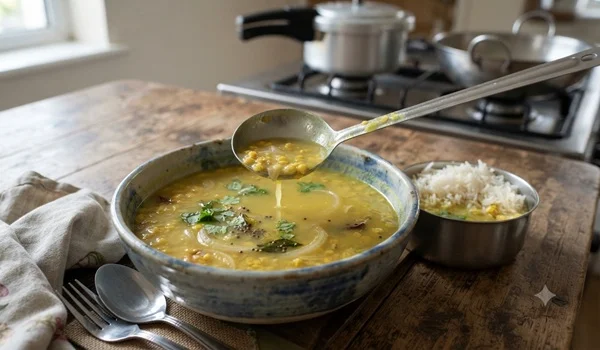
1. Too Much Water Was Added
The most common reason for watery dal is simply excess water.
Different dals absorb different amounts of water. For example, moong dal cooks relatively quickly, while chana dal generally needs more cooking time. If you use the same amount of water for every variety, the final consistency can vary considerably.
If too much water is added at the beginning, the dal may remain thin even after the lentils are fully cooked.
2. The Dal Variety Matters
Not all dals behave in the same way.
Some varieties break down easily and naturally create a creamy consistency. Others retain their shape for longer and may require more cooking or mashing.
For example:
- Moong dal can become soft and creamy relatively quickly.
- Masoor dal generally cooks easily and can thicken as it breaks down.
- Toor dal becomes creamy when cooked thoroughly and mashed.
- Chana dal tends to retain its shape and may produce a less creamy texture unless cooked and mashed appropriately.
Understanding the type of dal you are cooking helps you adjust the water quantity.
3. Dal Has Not Been Simmered After Cooking
Pressure cooking or boiling may cook the lentils, but the dal can still contain excess liquid.
A common solution is to simmer the cooked dal uncovered for several minutes. As water evaporates, the consistency gradually becomes thicker.
Stir occasionally so that the dal does not stick to the bottom.
4. Extra Water Was Added During Cooking
Sometimes dal is initially prepared with the right amount of water, but additional water is added because it appears too thick while cooking.
If too much water is added at once, the finished dal can become watery.
Instead, add small quantities when necessary and allow the dal to cook for a little longer before deciding whether more liquid is required.
5. The Dal Was Not Mashed Properly
Well-cooked lentils naturally release starch and create thickness. If the cooked dal is left completely intact, particularly with varieties such as toor dal or chana dal, it may appear thinner than expected.
Using a ladle, whisk or dal masher to gently mash the cooked lentils can make a significant difference.
How to Fix Watery Dal
1. Simmer It Without a Lid
This is usually the simplest solution.
Transfer the cooked dal to a suitable pan and simmer it uncovered over low to medium heat. Stir regularly.
As excess water evaporates, the dal will gradually become thicker.
Do not use extremely high heat, as the dal can stick or burn at the bottom.
2. Mash the Cooked Dal
If the lentils are already soft, mash them using the back of a spoon, ladle or potato masher.
Mashing breaks down the cooked lentils and releases their starch, helping create a thicker and smoother consistency.
For very creamy dal, you can whisk it after cooking.
3. Let It Rest
Dal often thickens slightly as it cools.
If it is only a little thinner than desired, turn off the heat and allow it to rest for several minutes before adding anything else.
This is particularly useful because adding more ingredients unnecessarily can change the flavour.
4. Add More Cooked Dal
If the dal is extremely watery and you have extra cooked lentils available, adding them can improve the consistency.
Cook the additional dal separately until soft, then mix it into the watery dal and simmer together.
This method is preferable when you want to increase thickness without significantly changing the flavour.
5. Adjust the Tempering Carefully
Tadka or tempering does not normally solve watery dal by itself, but it can improve the overall flavour after the consistency has been corrected.
Prepare the tempering separately with ingredients such as cumin, garlic, dried chilli or other spices according to your recipe, then add it to the thickened dal.
Should You Add Flour to Thicken Dal?
Adding flour is generally unnecessary for traditional dal.
Wheat flour, cornflour or other starches may make the texture unusually thick or alter the natural taste. If the lentils are properly cooked, simmering and mashing them is usually enough.
If you need to thicken dal quickly, using more cooked dal is generally a more natural approach.
How Much Water Should You Use?
There is no single water ratio that works perfectly for every dal because the quantity depends on:
- Type of dal
- Whether it was soaked
- Cooking method
- Desired consistency
- Age and quality of the lentils
- Cooking vessel
Instead of following one fixed ratio for every variety, start with a moderate amount of water and adjust during cooking.
For pressure-cooked dal, you can also check the consistency after cooking and add hot water gradually if it becomes too thick.
How to Prevent Watery Dal
A few simple habits can make the consistency much easier to control.
Measure the water: Avoid adding large amounts of water without considering the type of dal.
Know your dal: Different lentils need different cooking times and water quantities.
Do not over-add water while cooking: If the dal looks thick before it is fully cooked, add water gradually.
Mash after cooking: Properly breaking down soft lentils creates a naturally creamy texture.
Simmer after pressure cooking: This allows excess water to evaporate and gives you better control over the final consistency.
Remember that dal thickens while cooling: Do not make it extremely thick on the stove if you plan to serve it after some time.
What If Dal Becomes Too Thick?
The opposite problem is also common. If dal becomes too thick, simply add a little hot water and mix thoroughly.
Add the water gradually rather than all at once. Taste the dal afterward and adjust salt and spices if necessary.
Final Thoughts
Watery dal is usually caused by excess water, insufficient simmering, or lentils that have not been mashed enough. Fortunately, you do not need complicated ingredients to fix it.
The easiest method is to simmer the dal uncovered while stirring occasionally. If the lentils are soft, mash or whisk them to release their natural starch. For severely watery dal, adding extra cooked lentils can restore the consistency without relying on flour or artificial thickeners.
With a little attention to the type of dal, water quantity and cooking time, it becomes much easier to achieve a thick, creamy and flavourful dal every time.