Lifestyle Inflation: Why Higher Income Does Not Always Create More Wealth
Getting a higher salary or earning more from a business is generally considered a sign of financial progress. However, a higher income does not automatically result in greater wealth.
One reason is lifestyle inflation.
Lifestyle inflation occurs when spending increases as income increases. Instead of directing most of the additional income toward savings, investments or debt reduction, a person gradually increases their standard of living.
The result can be surprising: income rises, but wealth does not increase at the same pace.
What Is Lifestyle Inflation?
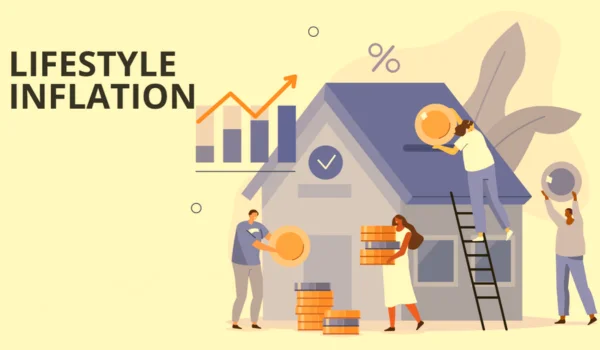
Lifestyle inflation means increasing spending as your income grows.
For example, suppose someone earns ₹50,000 per month and spends ₹40,000.
Later, their income increases to ₹80,000.
Instead of continuing to spend around ₹40,000, they may start spending ₹70,000.
Their income has increased by ₹30,000, but their monthly surplus has increased by only ₹10,000.
The person is earning more but has not created as much additional financial capacity as the income increase might suggest.
How Lifestyle Inflation Happens
Lifestyle inflation often happens gradually rather than through one major financial decision.
A person may initially upgrade one area of life:
- Better phone
- More expensive restaurants
- Higher rent
- Frequent travel
- Premium subscriptions
Then another upgrade follows.
Over time, several small increases can become a significant increase in monthly expenses.
Because the changes happen gradually, they may not feel excessive individually.
Income Growth vs Wealth Growth
Income and wealth are different concepts.
Income is the money you earn.
Wealth represents the value of your assets after accounting for liabilities.
A person earning ₹2 lakh per month is not necessarily wealthier than someone earning ₹1 lakh per month.
The higher-income individual may have:
- Larger expenses
- Higher debt
- Less savings
- More expensive lifestyle commitments
Meanwhile, the person earning ₹1 lakh may save and invest a larger proportion of their income.
Over time, the second person’s net worth could potentially grow faster.
Why Higher Fixed Expenses Matter
Some lifestyle upgrades create recurring expenses rather than one-time costs.
For example, moving into a significantly more expensive home can increase:
- Rent or loan payments
- Maintenance
- Utilities
- Furniture costs
- Transportation expenses
Similarly, purchasing a more expensive vehicle can increase:
- Loan payments
- Insurance
- Fuel costs
- Maintenance
These recurring commitments reduce future financial flexibility.
Lifestyle Inflation Can Reduce Savings Rate
Consider someone earning ₹1 lakh per month.
If they save ₹30,000, their savings rate is:
30%
Now suppose their income increases to ₹1.5 lakh but their spending also rises significantly, leaving only ₹35,000 for savings.
Their income has increased by 50%, but their savings have increased by only ₹5,000.
The savings rate has also fallen to approximately:
23.3%
This is one way lifestyle inflation can prevent income growth from translating into wealth creation.
Lifestyle Inflation and Social Comparison
Lifestyle decisions can also be influenced by what people see around them.
As income increases, people may compare their lifestyle with:
- Friends
- Colleagues
- Neighbours
- Social media personalities
- Professional peers
This can create pressure to upgrade homes, cars, clothing, travel or other spending categories.
The problem is that other people’s visible consumption does not reveal their complete financial position.
Someone may appear financially successful while carrying substantial debt.
Higher Income Can Increase Financial Expectations
People often become accustomed to a new standard of living.
An expensive restaurant may initially feel like a special occasion. After repeated visits, it can become a normal expense.
The same can happen with:
- Premium travel
- Larger homes
- New vehicles
- Expensive gadgets
- Entertainment
- Personal services
Once these expenses become part of the normal lifestyle, reducing them later can feel like a financial downgrade.
Why Recurring Costs Are More Important Than Occasional Spending
Buying a ₹30,000 phone once is different from taking on an additional ₹30,000 monthly expense.
Recurring expenses have a long-term impact on cash flow.
For example, an additional ₹10,000 monthly lifestyle expense equals:
₹1,20,000 per year
Over several years, the cumulative amount can become substantial.
If that money could otherwise have been saved or invested, the opportunity cost may be even larger.
Lifestyle Inflation Can Affect Financial Goals
Higher spending can make long-term goals more expensive.
Suppose a person wants to retire with a particular standard of living.
If their lifestyle becomes significantly more expensive during their working years, they may need a much larger retirement corpus to maintain that lifestyle later.
Therefore, lifestyle inflation can affect not only current savings but also the amount of money required for future financial independence.
Not All Lifestyle Upgrades Are Bad
Lifestyle inflation is not automatically a negative thing.
Higher income can reasonably be used to improve quality of life.
Someone may choose to spend more on:
- Better housing
- Health and wellness
- Education
- Family experiences
- Travel
- Convenience
The problem arises when spending increases without considering long-term financial priorities.
Enjoying the benefits of higher income and building wealth do not have to be mutually exclusive.
Intentional Lifestyle Inflation
A more sustainable approach is to make lifestyle upgrades deliberately.
For example, when income increases, a person could divide the additional income among:
- Higher savings
- Investments
- Debt repayment
- Lifestyle improvements
- Personal goals
This allows the person to enjoy increased earnings without allowing expenses to consume the entire increase.
The Importance of Savings Rate
The savings rate is a useful way to observe lifestyle inflation.
A simple calculation is:
Savings Rate = Savings ÷ Income × 100
Suppose income rises from ₹1 lakh to ₹1.5 lakh.
If savings rise from ₹20,000 to ₹50,000, the savings rate has improved substantially.
But if savings rise only from ₹20,000 to ₹25,000, most of the additional income is being absorbed by higher spending.
Lifestyle Inflation vs Lifestyle Improvement
There is an important distinction.
Lifestyle improvement means using higher income to make life better in ways that provide meaningful value.
Lifestyle inflation refers specifically to the tendency for spending to automatically rise as income rises.
The same expense can be either depending on the person’s financial situation and priorities.
For example, moving to a safer or more convenient home may be a deliberate lifestyle improvement. Taking on expensive recurring costs simply because income has increased may contribute to lifestyle inflation.
A Simple Comparison
Imagine two people receive a ₹50,000 monthly income increase.
Person A
Uses the additional income for:
- ₹20,000 investments
- ₹10,000 debt repayment
- ₹20,000 lifestyle improvement
Person B
Uses the entire ₹50,000 for:
- More expensive housing
- Dining
- Travel
- Entertainment
- Other recurring expenses
Both have increased their standard of living to some extent, but Person A is also converting part of the income increase into financial assets or reduced liabilities.
Over time, that difference can become significant.
Final Thoughts
Lifestyle inflation explains why earning more money does not automatically mean becoming wealthier.
When spending rises alongside income, the additional earnings may have little effect on savings, investments or net worth.
The goal does not have to be avoiding every lifestyle upgrade. Instead, higher income can be used intentionally so that some of the increase improves today’s life while another portion strengthens the future financial position.
Ultimately, wealth is influenced not simply by how much you earn, but by how much of that income you keep, invest and convert into long-term financial assets.